The Silence Of The Lambs Full Movie
The Silence Of The Lambs Full Movie 4,3/5 845votes
Silence of the Lambs 2. Oscar film. In memory of today’s passing of a great director, Deadline is rerunning our last story that featured a lengthy interview with Jonathan Demme.
Originally published Feb. The Silence of the Lambs. Demme participated and was most generous and reflective on looking back at an unlikely triumph, the rare horror movie from a dying studio that found its way to Oscar gold, winning all the night’s major prizes. EXCLUSIVE: Valentine’s Day marked the 2. The Silence Of The Lambs. It’s the first and only Best Picture- winning horror film; the last film to win Oscars in the five key categories; and the only modern- era film to win Best Picture despite being released over a year before its Oscar night triumph. The film’s success–five Oscars and $2.
Orion, spent nothing an Oscar campaign while Best Picture rivals Beauty And The Beast, Bugsy, JFK and The Prince Of Tides spent lavishly. But long before Silence, Anthony Hopkins, Jodie Foster, Jonathan Demme and Ted Tally won gold, and way before Thomas Harris would sell movie rights to his follow- up novel for a near record $1. TV series, Silence was a film property no studio wanted any part of. Everybody passed on the lurid cannibal serial killer subject matter, and the proud studio that bit was so broke at the end that it dropped the film in February for the cash, seemingly dooming its Oscar chances. Deadline got this trio to reminisce with a lot of untold stories: former Paradigm agent Robert Bookman, who brokered Harris’ book deals (and had a cameo in the film along with former colleague Rick Nicita); Tally, who started writing with notes from Gene Hackman; and Demme, who started his career directing for Roger Corman then rose to classy, edgy hits Something Wild and Married To The Mob, and blended those sensibilities to elevate a genre film into something more. Related. Directors Guild Hails Jonathan Demme As “Iconic” & “Groundbreaking”WHY STUDIOS DIDN’T DEVOUR THE BOOK RIGHTS LIKE LECTER ON A CENSUS TAKER’S LIVERBOB BOOKMAN: The Thomas Harris book Red Dragon was bought by Warner Bros, put in turnaround, and Dino De Laurentiis picked it up, made Manhunter, and it wasn’t a financial success. When Silence was published, Thomas had the right to sell a one- picture license, but he would have to change character names and places.
Nobody was interested, even when it was way up on the bestseller list. I remember hearing that Paramount had negative coverage. I called Ned Tanen and said, ‘I know that you got very negative coverage. I’m not asking you to read the book yourself. Just give it to another reader whose opinion you really trust and who has a different sensibility.

- The Silence of the Lambs movie reviews & Metacritic score: In pursuit of one serial killer, ambitious FBI student Clarice Starling (Foster) is forced to enli.
- The Tomatometer rating – based on the published opinions of hundreds of film and television critics – is a trusted measurement of movie and TV programming quality.
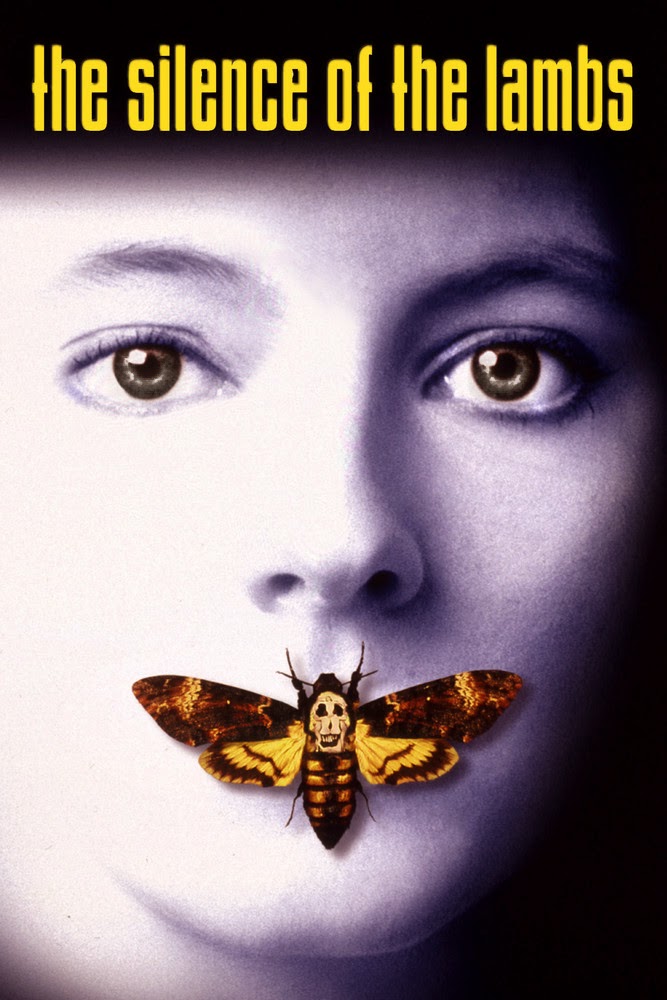
- Believe it or not, The Silence of the Lambs was released on Valentine’s Day in 1991. The movie was scheduled for release in the middle of February because Orion.
He called me back three days later. He said, ‘I did what you asked, and the other reader gave it a definite recommend. I’m still not buying it.’ Nobody wanted it. It was a combination of the serial killer aspect of it and the failure of Manhunter.
It reminded of how the science fiction genre was as dead as a door nail…until George Lucas made Star Wars. Then one day my colleague Fred Specktor asks, are the rights still available? Gene Hackman wants to buy them. Gene called a good friend, Arthur Krim at Orion, and they bought it together, 5. Gene wanted to direct, and play Hannibal Lecter. TED TALLY: I was the first writer on the job.
More From IndieWire ‘The Silence of the Lambs’ 4K Restoration Trailer: Hannibal Lecter Returns to Terrify the Big Screen; Paul Thomas Anderson Shares 5 Reasons.
· (CNN)Filmmaker Jonathan Demme, whose Oscar-winning thriller "The Silence of the Lambs" terrified audiences and introduced one of the most indelible. “After all it was a great big world With lots of places to run to.” Release in 1991, Jonathan Demme’s The Silence of the Lambs is unquestionably one of the. Related Celebrities Who Died in 2017 Hollywood Reacts to Oscar-Winning Director Jonathan Demme’s Death. Following “The Silence of the Lambs,” Demme used his.
Hackman gave me his approval finally after a lot of discussion. He didn’t have much input. We only had meetings where I pitched my ideas.
It was basically, go write the first draft. We didn’t talk much about it. He hadn’t decided whether he was going to also try to play Lecter, while directing it. He thought he might have to drop back to playing Crawford, the FBI boss.
He did say, maybe Bobby will play Lecter, but I didn’t have the nerve to ask, Bobby who? Bobby Duvall? Bobby Redford? Bobby De Niro? He just assumed that I would know who Bobby was.
And then he quit, while I was writing my first draft. He never called me. I just heard one day from my agent, Gene Hackman’s dropped out of the project. BOOKMAN: I get a call from Fred saying, you won’t believe this. Gene Hackman’s daughter read the book. And she called her father and said, ‘Daddy, you’re not making this movie.’ So, Gene called Arthur, told him what happened.
Arthur said, ‘Don’t worry Gene, I’ll buy out your half.’ That’s how Orion got the rights. TALLY: That was quite a kick in the teeth because at the same time I found out that Orion hadn’t quite signed the book rights either. It was the worst two or three days of my professional life. I was a third of the way in, and I hadn’t been paid. I thought, this thing is going downhill in a hurry. But then I got a reassuring phone call from Mike Medavoy saying don’t worry about it. Keep writing. We’re going to find the right director for this.
Just keep writing. JONATHAN DEMME: God bless Gene Hackman’s daughter, if that’s true, and that’s what I’ve always heard. God bless her. Ted Tally was at work on the screenplay under Hackman’s notes. I had just done two pictures with Orion, Something Wild followed by Married to the Mob. How can I make you understand how incredible it was, working at Orion with Bill Bernstein, Mike Medavoy, Eric Pleskow, and Arthur Krim, these four amazing human beings? The whole Orion zeitgeist, of treating filmmakers as partners, to me it’s inseparable from the success of Silence of the Lambs.
It was Camelot. I had a script I liked, about a road rage victim, where somebody goes ballistic and chases our hero through the rest of the movie. I’d been jones- ing to work with Danny Glover and I wanted to do a thriller. I gave Mike Medavoy the script. Mike called the next day and said, ‘Jonathan, this is a good script and we love Danny. We’ll go with this, but I want you to read something before we commit to this picture.’ He sent me the book, The Silence of the Lambs. It was all there. This brilliant novelist Thomas Harris, at the peak of his powers, telling this classic American story, with this great leading woman part.
I was like, ‘Oh my God, yes.’ I just knew it could be scary as hell, an incredible picture. Ted Tally did a remarkable job on the screenplay. But every night we were shooting, I’d study the scene for tomorrow, and I’d also go back to the book and read what Harris had written, all the levels that were going on there. I’d arrive on the set just tremendously fortified, from the Harris point of view and the terrific Ted Tally script. BOOKMAN: I don’t remember the exact deal, maybe $1 million.
There was still the issue of Hannibal Lecter and Dino De Laurentiis. They tried to come up with alternate names, but nobody could think of a better one. I get a call. Would you mind asking Dino for the right to use the name?
In my opinion, if it had been a studio, they would’ve told me to stick it where the sun doesn’t shine. But Dino’s a dealmaker and he says, no problem. He got some rights out of it, but I can’t imagine that movie without Hannibal Lecter. If it had been another name, the franchise would not have had the same value.
Dino was smart, and he was able to exploit that in the sequel, when Thomas Harris finally wrote it ten years later. I recall Orion wanted Jodie Foster, but Jonathan was intrigued by Michelle Pfeiffer after Married To The Mob. TALLY: Jodie was always in my mind. It was a no- brainer. She had just won an Academy Award for The Accused. She was the right age for the character.
She had the right intelligence to play somebody like that. I thought she was just a fabulous, fabulous actress, and she actually even called me while I was writing the first draft. We had never met, and she called me to campaign for the part.
That was before Jonathan was on board. Jonathan initially wanted Michelle Pfeiffer, which made sense since they’d just worked on Married to the Mob. I said, she’s too beautiful. She initially toyed with the idea, and then turned it down, worried that it was too violent.
She’s a wonderful actress but I thought she was a few years too old and just too beautiful. It’s too distracting.
The Hidden Meaning of That Iconic Line in 'The Silence of the Lambs'In a sweltering New Orleans, a wilted Southern belle collides with the dysfunctional marriage of her sweet sister and brutish brother- in- law. This is the plot of Tennessee Williams's classic play, A Streetcar Named Desire, which opened on Broadway in 1.
But the story of its making and legacy is even wilder than Stanley Kowalski's screaming. WILLIAMS SET THE PLAY IN HIS CHOSEN HOME. The boy born Thomas Lanier Williams III lived in Columbus, Mississippi, until he was 8 years old.
From there, his traveling salesman father bounced the family around Missouri, moving 1. As he forged a path of his own, Williams wandered from St. Louis's Washington University to the University of Iowa to the New School in New York City, and even spent some time working on a chicken ranch in Laguna Beach, California.
But at 2. 8, he found his “spiritual home” in New Orleans. There he officially changed his given name to the college nickname he'd come to prefer. Inspired by the culture of the French Quarter, he wrote short stories and what would become one of his most popular plays.
There he became Tennessee Williams, in more ways than one. A STREETCAR NAMED DESIRE WAS NAMED AFTER A REAL STREETCAR LINE. Named for its endpoint on Desire Street in the Ninth Ward, the Desire line ran down Canal Street onto Bourbon and beyond. It operated from 1. Broadway, it was retired in favor of buses that were quieter and put less stress on the streets and surrounding buildings. Gone but not forgotten, one of the Desire cars was restored in 1.
In 2. 00. 3, the city even proposed resurrecting the streetcars and this famous line's name, but this dream died when federal funding was denied. STANLEY KOWALSKI WAS INSPIRED BY TWO MEN. The name "Stanley Kowalski" was borrowed from a factory worker Williams met while living in St. Louis. But the playwright's true muse was Amado ‘Pancho’ Rodriguez y Gonzales, a Mexican boxer who was once Williams's lover, and who argued the character he inspired should be Latino, not Polish. Ten years his junior, Gonzalez met Williams when the writer traveled to Mexico City in late 1. Entranced by the macho 2. Williams invited Gonzalez to move into his New Orleans home.
Their relationship lasted only two years. By the time Streetcar Named Desire hit Broadway, Williams had moved on to who would be the love of his life, aspiring writer Frank Merlo. BLANCHE MAY HAVE BEEN A STAND- IN FOR WILLIAMS. As a gay man, the writer had been mocked all his life, called "sissy" by sneering peers, and “Miss Nancy” by his drunken, abusive father. In some respects, he was like Blanche, a gentle Southern soul, thirsty for love and kindness, yet dangerously fascinated by gruff men. Elia Kazan, who directed both the original Broadway production of Streetcar and its movie adaptation, once said of Williams, "If Tennessee was Blanche, Pancho was Stanley….
Wasn’t he [Williams] attracted to the Stanleys of the world? Sailors? Rough trade? Danger itself? Yes, and wilder. The violence in that boy, always on a trigger edge, attracted Williams at the very time it frightened him.”The closest Williams came to commenting on this comparison was saying of his work, "I draw every character out of my very multiple split personality. My heroines always express the climate of my interior world at the time in which those characters were created.”5.
A STREETCAR NAMED DESIRE WAS WILLIAMS'S SECOND BIG BROADWAY HIT. In 1. 94. 5, Williams broke through with his groundbreaking autobiographical drama The Glass Menagerie. Just a year and a half after this acclaimed production closed, A Streetcar Named Desire opened to even greater praise. Reportedly, the standing ovation lasted for 3. THE PLAY WAS DRASTICALLY DIFFERENT FROM ITS BROADWAY CONTEMPORARIES. In her historical essay on Williams, critic Camille Paglia notes that A Streetcar Named Desire was a total change from The Glass Menagerie. Where the former had a "tightly wound gentility," the latter boasted "boisterous energy and eruptions of violence." But more than that, "Streetcar exploded into the theater world at a time when Broadway was dominated by musical comedies and revivals." She adds, "the shocking frankness with which Streetcar treated sex—as a searingly revolutionary force—was at odds with the dawning domesticity of the postwar era and looked forward instead to the 1. Watch Spider-Man Megavideo more.
IT CEMENTED WILLIAMS'S REPUTATION AS A MAJOR VOICE IN AMERICAN THEATER. The New York Times critic Brooks Atkinson proclaimed, "Mr. Williams is a genuinely poetic playwright whose knowledge of people is honest and thorough and whose sympathy is profoundly human." A Streetcar Named Desire went on to run for more than 8. New York Drama Critics' Circle Award for Best Play.
Jessica Tandy earned a Tony Award for originating the role of Blanche, and Williams was honored with the Pulitzer Prize for Drama. STANLEY KOWALSKI LAUNCHED MARLON BRANDO. At 2. 3, Brando was a method actor who was drawing praise in a string of Broadway roles.
The year before A Streetcar Named Desire debuted at the Ethel Barrymore Theatre, New York critics had voted him "Broadway's Most Promising Actor" because of his powerful performance in Maxwell Anderson's Truckline Café. His portrayal as Kowalski delivered on that promise, and then some. Playwright Arthur Miller wrote that he seemed "a tiger on the loose, a sexual terrorist … Brando was a brute who bore the truth." And this intensity was captured in the 1. Oscar nomination for what was only his second film role. A STREETCAR NAMED DESIRE REDEEMED WILLIAMS'S HOLLYWOOD REPUTATION. Following the success of The Glass Menagerie's Broadway run, Warner Bros.
Williams to draft an adapted screenplay for a movie version. But seeking a more commercial offering, they hired another writer to tack on a happy ending, behind Williams's back. The result was a critically panned dud that the playwright denounced as a "travesty." Nonetheless, Williams returned to Warner Bros. A Streetcar Named Desire. This time, however, the director and most of the cast from the Broadway show were kept on for the film, which went on to earn an impressive 1. Academy Award nominations, winning four, including Best Supporting Actress (Kim Hunter) and Best Actress (Vivien Leigh). JESSICA TANDY WAS THE ONLY LEAD OF THE BROADWAY PLAY NOT CAST IN THE MOVIE.
Hollywood didn't care about her Tony or her rave reviews. Warner Bros. needed a big name to assure the film's success. So Tandy was dropped in favor of Leigh, who'd played the role of Blanche in a London production of A Streetcar Named Desire, but more importantly was a household name thanks to her first Oscar- winning role, that of Scarlett O'Hara in 1. Gone With The Wind. THE FILM WAS TAMER THAN THE PLAY. With mounting pressure from a public concerned about the influence movies have on children, Hollywood created The Motion Picture Production Code, a series of guidelines about what was acceptable and not in film. Thus, A Streetcar Named Desire's movie adaptation was forced to tone down some coarser language, and cut some of its most scandalous elements, like Blanche's promiscuity and her late husband being a closeted homosexual.
For instance, in the play Blanche demands of her sister, "Where were you? In bed with your pollack!" In the film, she says, "In there with your pollack!"1. WILLIAMS FOUGHT TO KEEP BLANCHE'S RAPE FROM BEING CUT. Following their climactic confrontation, the play implies Stanley rapes Blanche. But Warner Bros. felt this was too dark for the movie. Williams and Kazan sparred with the studio over this.
The former argued, "[The] rape of Blanche by Stanley is a pivotal, integral truth in the play, without which the play loses its meaning which is the ravishment of the tender, the sensitive, the delicate by the savage and brutal forces of modern society." Like in the play, this grievous crime occurs between scenes, but its implication is clear by the violent events that lead up to a fade to black. ONCE AGAIN, HOLLYWOOD TACKED ON A HAPPY ENDING.